

Osteria Francescana has no view of the sea or the mountains.
You can see neither a bell tower nor a town square.
Our horizon is shaped by imagination.
NEVER STOP PLANTING is a landscape of ideas.
Every month: art, stories, inspirations.
ART IS ONE.
NO ONE.
AND ONE HUNDRED THOUSAND.
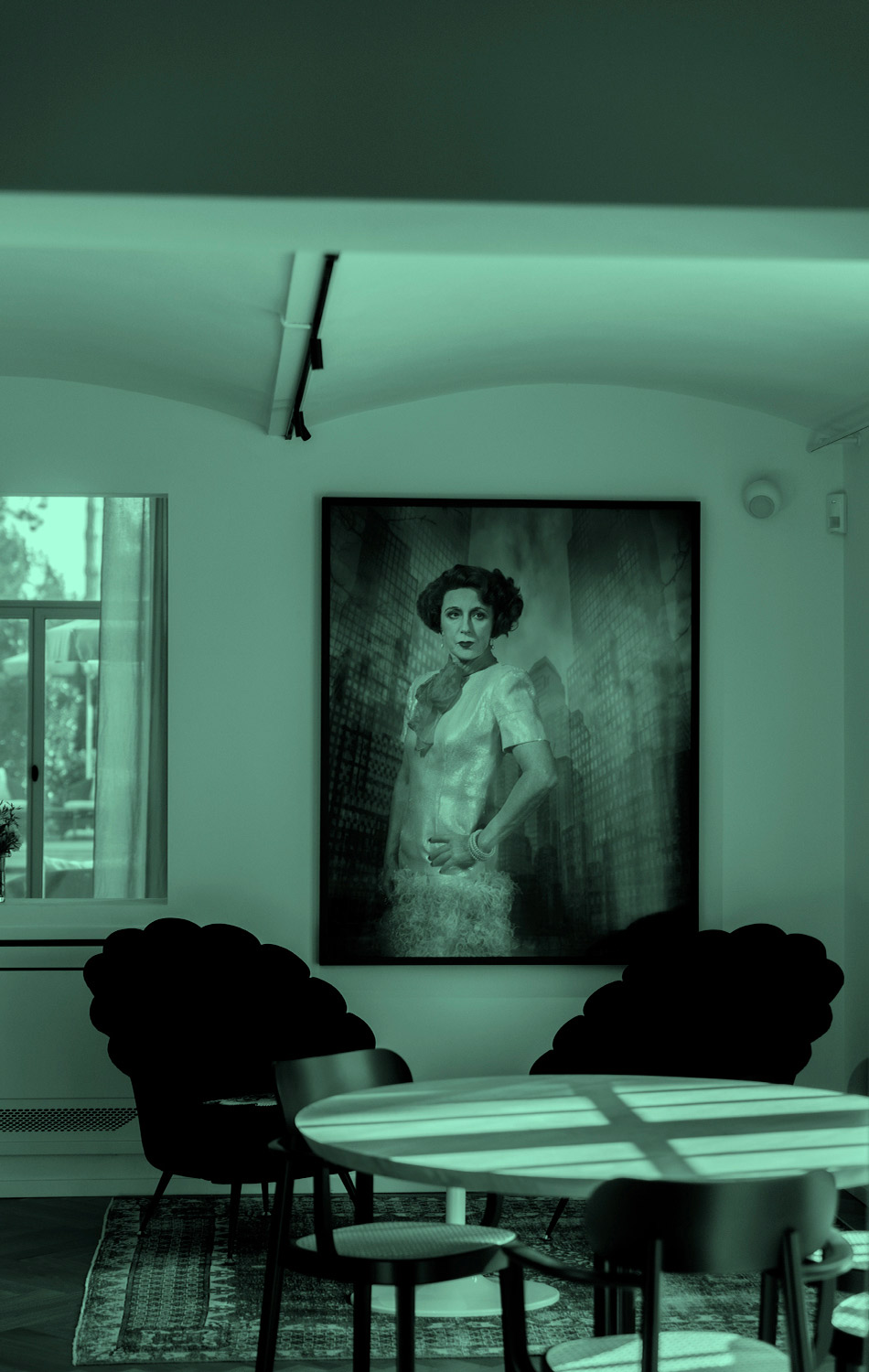
The contemporary American artist Cindy Sherman explores the boundaries between identity, gender, and representation through photography.
Sherman portrays herself in a wide range of staged roles and disguises, embodying characters who seem to belong to no one and to everyone at once: film heroines, clowns, historical figures, and women in everyday situations.
Credits: Ph Letizia Cigliutti
She does not invent identities.
She uncovers them.
She finds them embedded in culture, in cliché, in the accumulated ways women have been
seen, framed, and consumed.
Then she inhabits these identities until they crack.
Through her work, Sherman creates a space for multiplicity.
She is always present and never present.
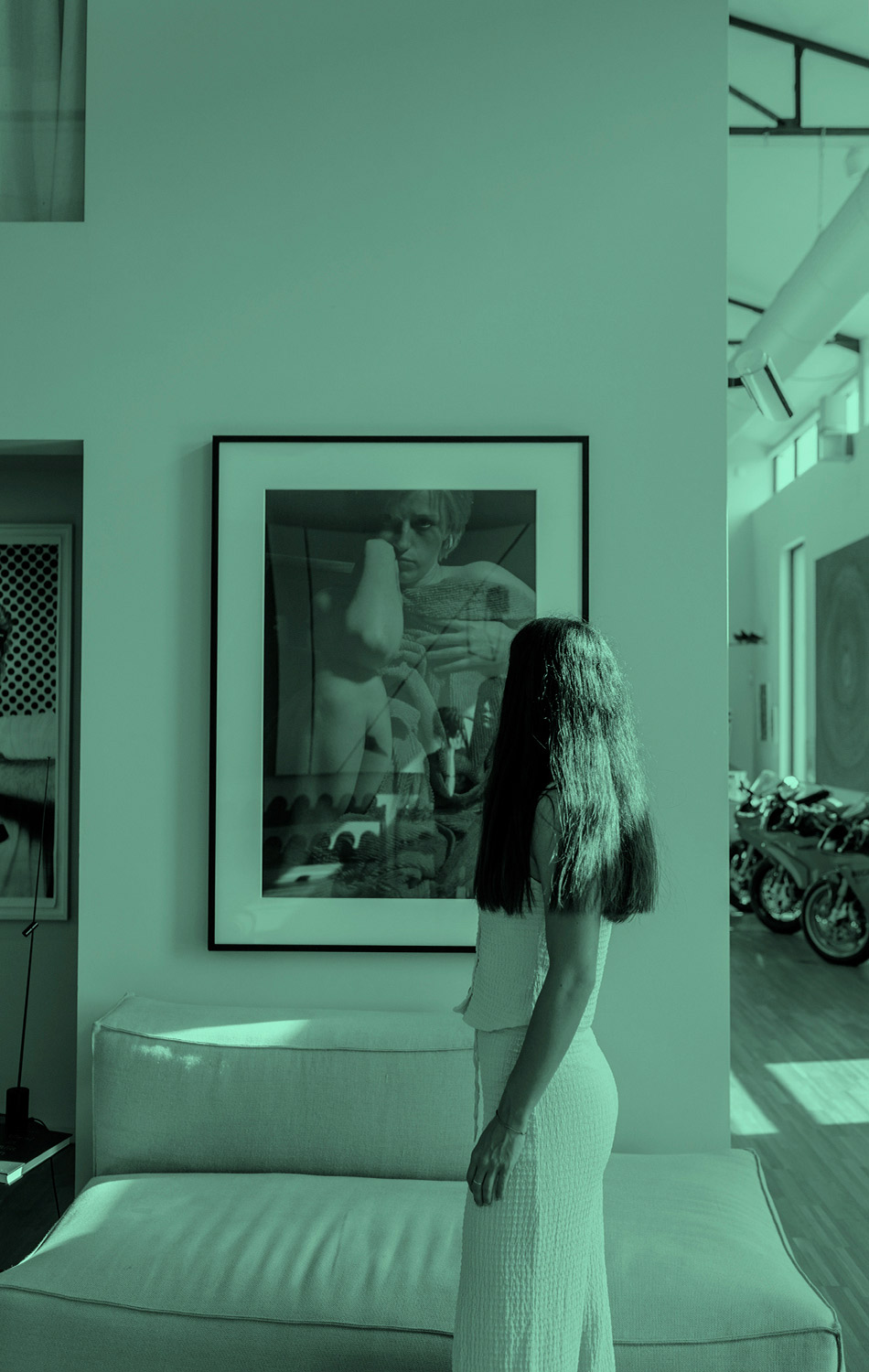
In each image, she looks away, as if something just outside the frame holds the truth.
We are left searching, projecting, completing the story ourselves.
And in doing so, we multiply her into countless versions—each one shaped by our own gaze.
Sherman’s art becomes a mirror.
It invites us to reflect on how we construct and perform our own identities.
It encourages us to consider the fluidity and malleability of the self.
It reminds us that identity is never singular.
It is layered, shifting, and unfinished.
Credits: Ph Letizia Cigliutti
ART IS ONE.
Every morning we look into the mirror and ask ourselves: Who am I?
We search for truth.
We search for depth.
We search for meaning.
ART IS NO ONE.
To understand who we are, often we have to immerse ourselves in the dark.
Know everything, to forget everything.
Step back, to step forward.
And find ourselves anew through discovery, creativity, and experimentation.
ART IS ONE HUNDRED THOUSAND.
Cooking, and art, create spaces for multiplicity and help push thought forward.
Through exchange, confrontation, and contamination with diverse people, ideas, and cultures , we expand the possibilities of who we can become.
“Our kitchens, like our identities, condense all the collisions, gestures, emotions, and memories that belong to one, no one, and one hundred thousand.”
Massimo Bottura
NEVER STOP PLANTING.
One, No One and One Hundred Thousand (Uno, Nessuno e Centomila) is a novel published in 1926 by Italian playwright, author, and poet Luigi Pirandello that explores identity and its fragmentation into “one hundred thousand” different selves in the eyes of others. Pirandello won a Nobel Prize in literature
in 1936.
