
Osteria Francescana has no view of the sea or the mountains.
You can see neither a bell tower nor a town square.
Our horizon is shaped by imagination.
NEVER STOP PLANTING is a landscape of ideas.
Every month: art, stories, inspirations.
ART IS POP!
British artist Damien Hirst is one of the most well-known Young British Artists who shook the art world by storm in the 1990s. Hirst’s work draws on the language of the everyday and transforms it into visual icons. He takes objects, images and experiences we can instantly recognise and explores profound, existential questions with them.
Credits: Nicole Marnatti
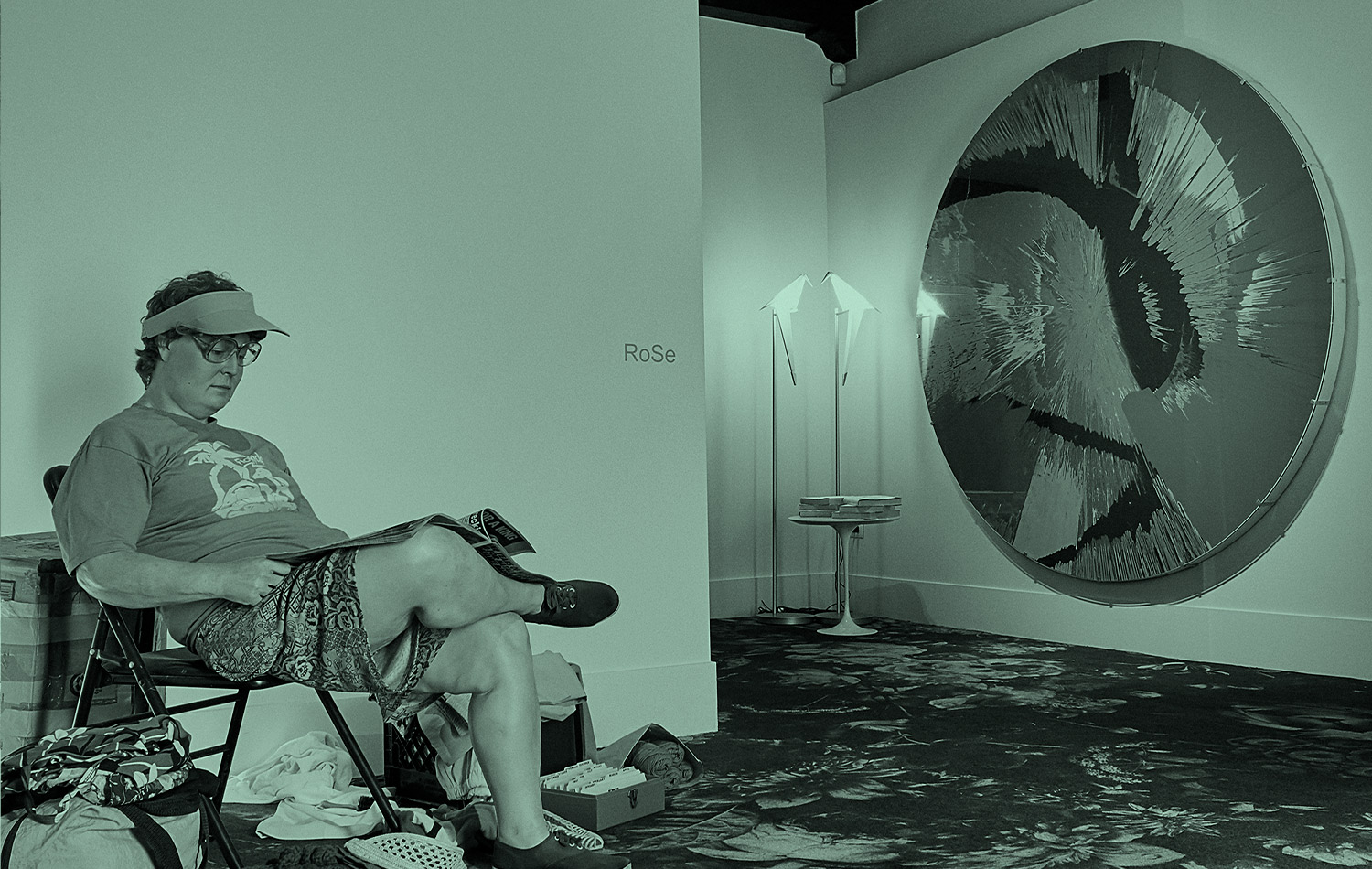
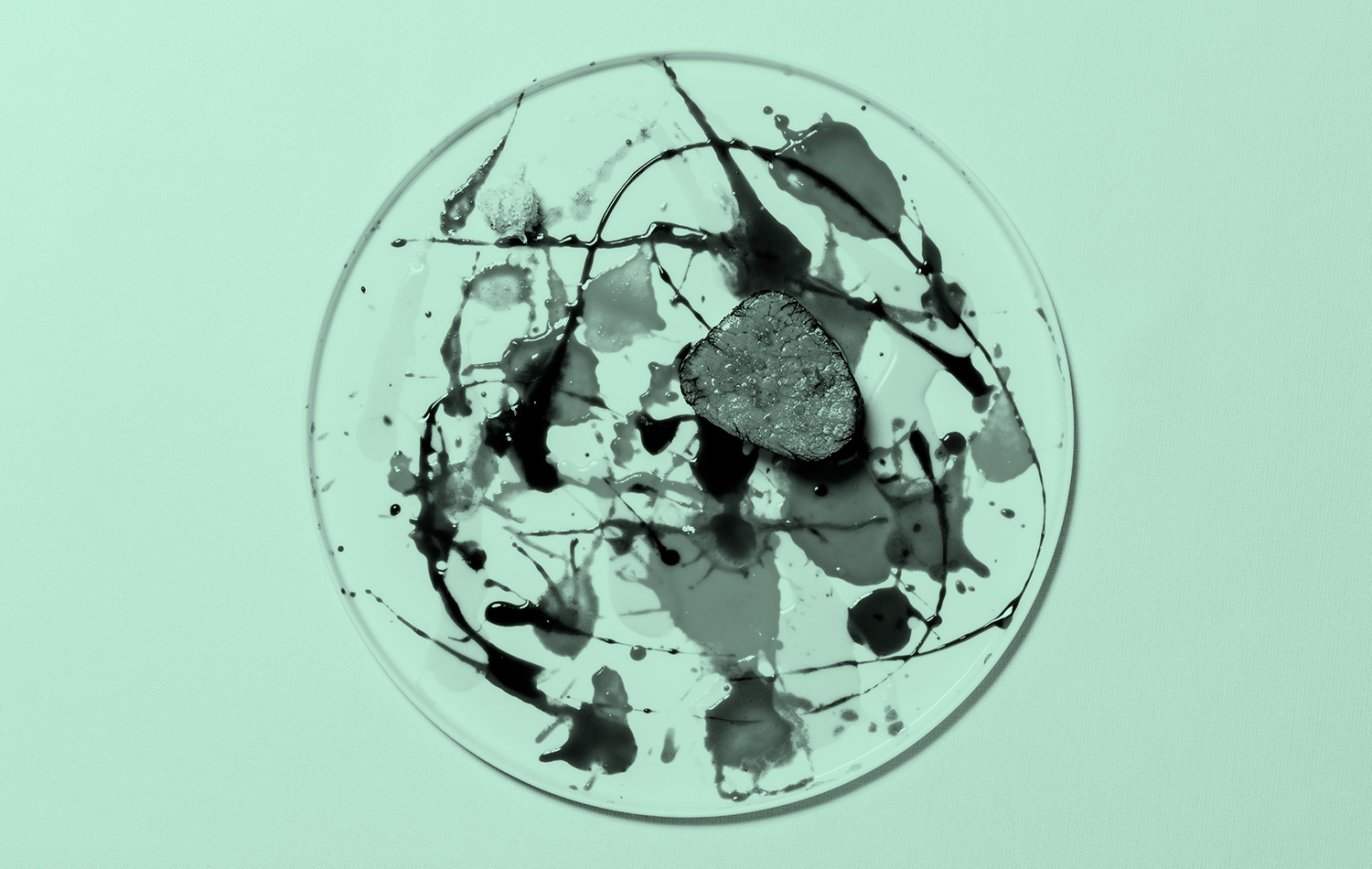
In 1975, Hirst was ten years old and fascinated by a children’s TV presenter creating colored paintings on a motorised cardboard spinning machine. Inspired by this childhood memory, Hirst began exploring the spin technique in 1992: paint is poured onto a rotating surface, and centrifugal force creates a series of abstract rings that expand outwards, with vibrant and hypnotic effects.
What begins as a playful activity becomes a meditation on chance and control: the artist initiates the process but can never fully determine its outcome. “Every time they’re finished, I really want to do another one,” Hirst once said. The chaotic, circular movement of these works represents life itself, while the accessibility of the spin painting technique suggests that anyone can be an artist.
Credits: Callo Albanese
“Beautiful Psychedelic Spin-painted Veal is inspired by the bold and vibrant work of Damien Hirst. I translated the artist’s playful approach to painting with brightly colored sauces that recall the dynamic vortex of Hirst’s spin paintings. Cooking is much more than a simple act of nourishment: it is a means of expression. Every dish has the potential to align flavors to tell stories and evoke emotion.”
Massimo Bottura
Credits: Davide Piferi De Simoni
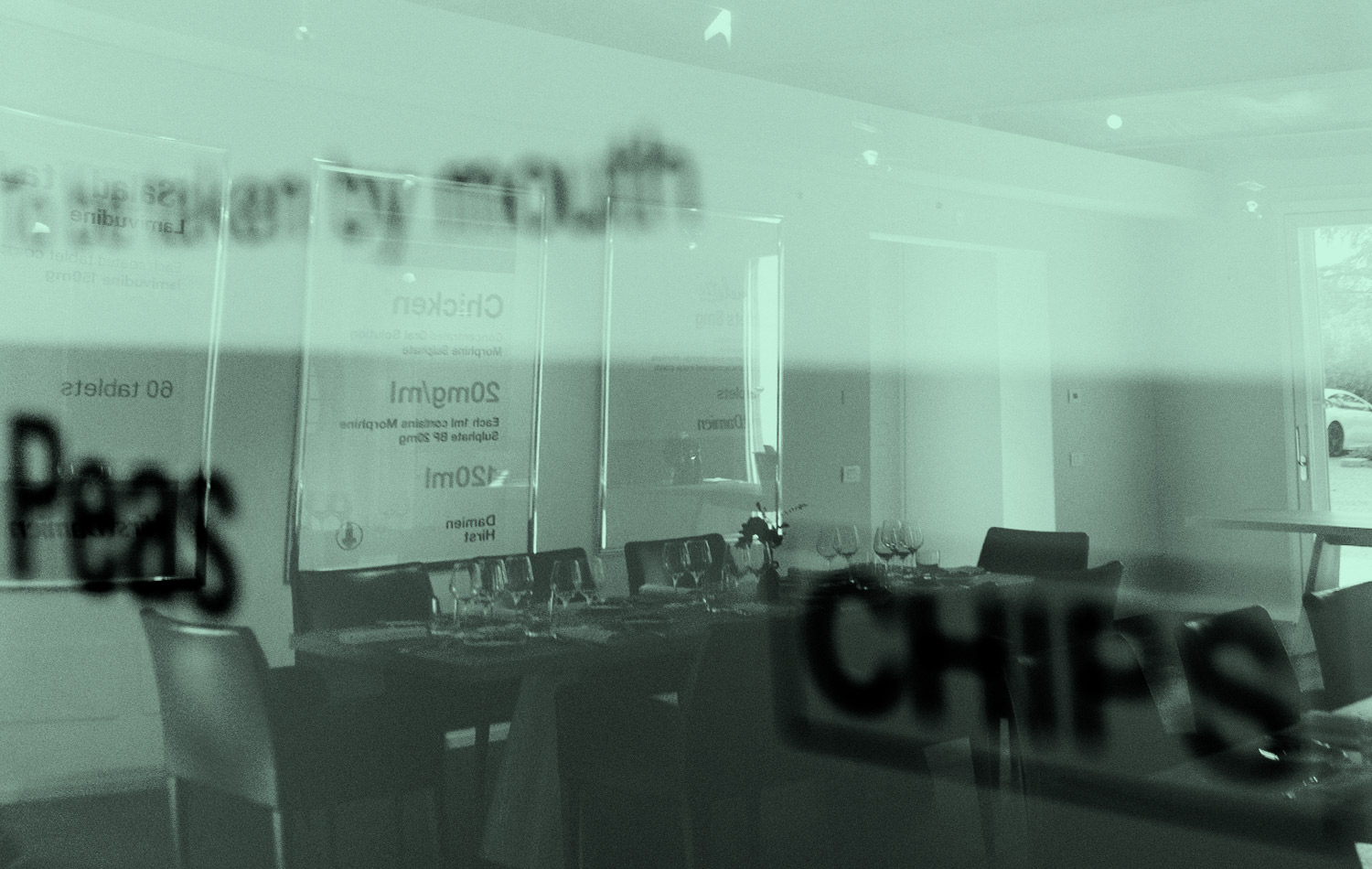
In The Last Supper series (1999), Hirst appropriates the visual language of pharmaceutical packaging, replacing the names of medicines with those of ordinary foods. The result is both humorous and unsettling. Food and medicine become almost interchangeable: substances we ingest to sustain the body. Yet the title introduces a third source of nourishment. The thirteen prints evoke Christ and the twelve apostles at the Last Supper, bringing food, medicine and religion together around a single question: what do we place our faith in when searching for salvation?
Credits: Callo Albanese
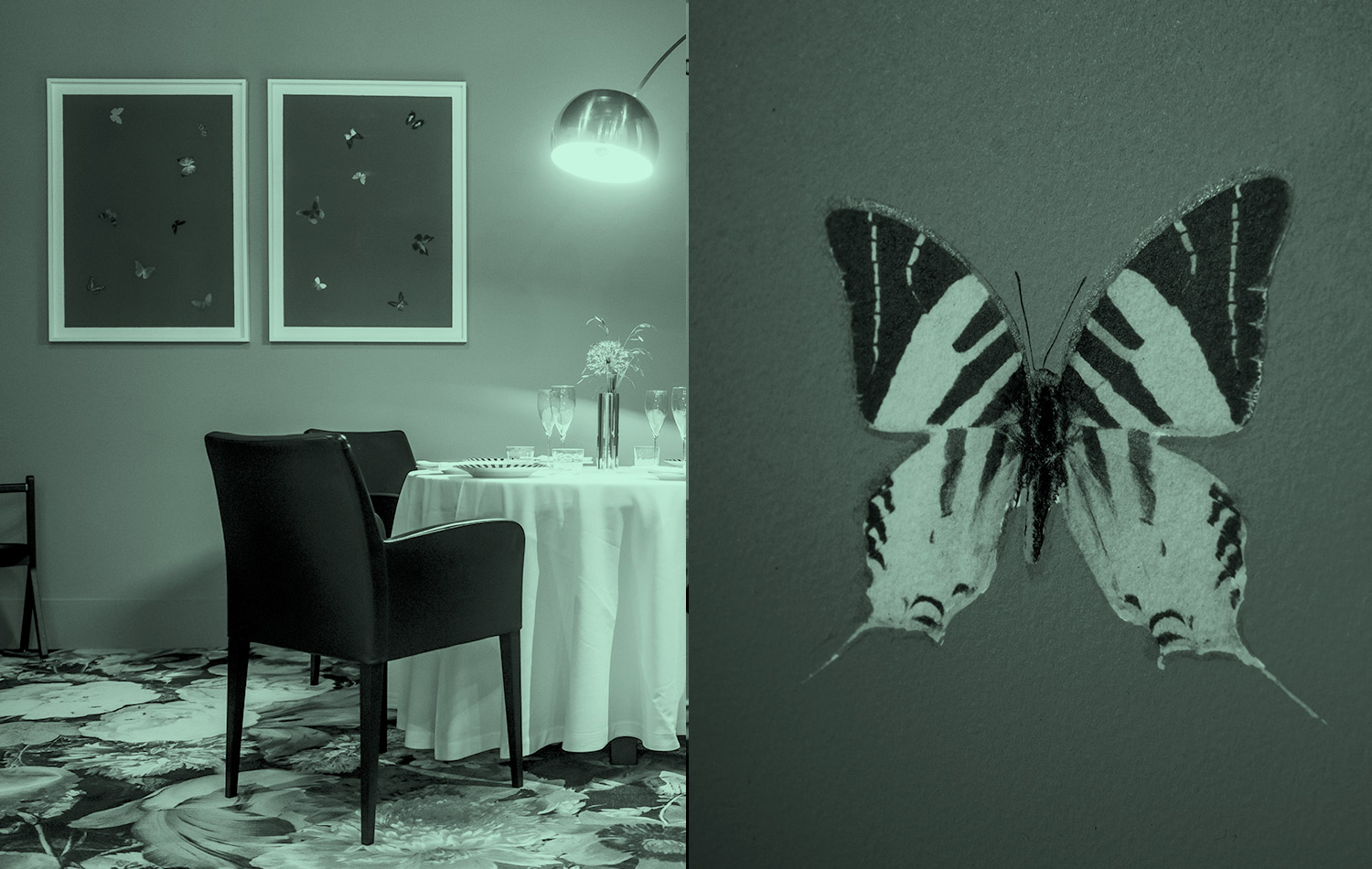
Butterflies’ metamorphosis from caterpillar to chrysalis to winged creature has long made them metaphors for the beauty and fragility of existence. Hirst makes this contradiction tangible. The butterfly that appears so vividly alive in the artwork is actually dead. The Butterfly canvases become ephemeral and eternal, joyous and tragic, perfect and imperfect all at once.
Hirst’s butterflies are more than decorative. By arresting them at the height of their splendour, the artist creates an image that is simultaneously a celebration of life and a reminder of mortality, capturing the dazzling yet doomed nature of human existence.
Art is Pop!
Hirst begins with what we already know, then turns the mirror.
With a clever twist, the artist asks the very questions that Pop Culture avoids:
How much of life is in our control?
What do we believe in?
What makes beauty precious and eternal?
NEVER STOP PLANTING
